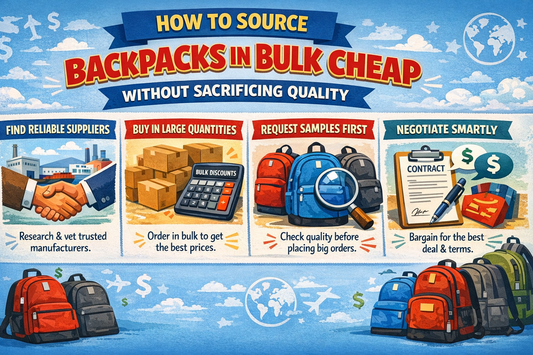
How to Buy Wholesale Backpacks for Retail in 2026: The Complete Guide for Retailers and Resellers
In today's competitive retail landscape, sourcing the right wholesale backpacks can make or break your business. Whether you're launching a new retail store, expanding an existing product line, or building an e-commerce empire, you need a strategic approach to wholesale backpack procurement. The difference between successful retailers and struggling ones often comes down to one decision: understanding how to navigate wholesale markets, negotiate with suppliers, and stock inventory that customers actually want to buy. This comprehensive guide reveals the insider strategies, supplier relationships, and purchasing frameworks that top retailers use to build profitable backpack inventory in 2026.
What is Wholesale Backpack Buying?
Wholesale backpack buying is the process of purchasing large quantities of backpacks directly from manufacturers or distributors at discounted bulk prices, with the intention of reselling them at retail markup. Rather than buying individual backpacks at consumer prices, retailers purchase dozens, hundreds, or thousands of units at significantly reduced per-unit costs, enabling profitable margins when sold to end customers.
Example: A retail store owner needs to stock backpacks for back-to-school season. Instead of buying 50 backpacks at $40 each (consumer price = $2,000), they purchase directly from a wholesale distributor at $12-18 per unit. At this wholesale cost, they can stock 100-150 backpacks for the same budget, then sell each at $35-45 retail, generating 100-200% markup. This wholesale advantage transforms the business model from low-margin retail to sustainable profitability.
Why Wholesale Backpack Sourcing is Powerful for Retailers
Wholesale backpack purchasing has revolutionized retail profitability by creating advantages that small and medium retailers can now access:
1. Dramatically Improved Profit Margins
Wholesale pricing creates extraordinary margin opportunities. A backpack costing $15 wholesale can retail for $45-60, generating 200-300% markup. These margins fund store operations, employee salaries, marketing, and profit. Budget backpack retailers typically achieve 40-60% margins; those sourcing strategically can hit 150-200% margins.
Real-world impact: A small retail store stocking 500 backpacks annually at wholesale pricing versus consumer pricing creates an additional $8,000-15,000 in annual profit—often the difference between break-even and sustainable business growth.
2. Inventory Control and Flexibility
Wholesale relationships provide flexibility unavailable to traditional retailers. You control quantity, timing, and product mix. Need 200 backpacks for summer inventory but only 50 for winter? Wholesale suppliers accommodate seasonal variation. This flexibility prevents overstock losses and obsolete inventory.
Practical benefit: Retailers report 30-40% reduction in unsold inventory by sourcing wholesale and adjusting quantities seasonally. This capital efficiency means less money tied up in dead stock.
3. Direct Supplier Relationships and Support
Wholesale suppliers often provide support beyond simple transactions: product recommendations, market trend insights, exclusive designs, and priority inventory allocation. Established relationships create competitive advantages unavailable to one-off purchasers.
Relationship advantage: Top retailers negotiate exclusive regional distribution rights, ensuring competitors can't source the exact same products locally—creating differentiation in crowded markets.
4. Customization and Branding Opportunities
Many wholesale suppliers offer customization: private labeling, custom colors, logo embroidery, and branded packaging. These options transform generic backpacks into unique retail offerings that justify premium pricing and build brand loyalty.
Differentiation benefit: Private-label backpacks sold under your own brand create customer loyalty and prevent direct comparison shopping. A "Smith's Premium Backpack" can't be directly compared to the same product sold at another retailer.
5. Access to Emerging Trends and New Products
Established wholesale suppliers maintain networks with manufacturers worldwide. They provide early access to trending products before they reach mass market. This first-mover advantage lets savvy retailers capitalize on trends before competitors catch on.
Competitive advantage: Being first to stock trending products (anti-theft backpacks, sustainable materials, tech-integrated designs) attracts customers and generates buzz before competitors can respond.
6. Reduced Risk Through Supplier Vetting
Quality wholesale suppliers pre-vet manufacturers, conduct quality testing, and provide product guarantees. You avoid manufacturing defects, substandard materials, and unreliable suppliers by partnering with established distributors who have already conducted due diligence.
Risk mitigation: Wholesale supplier guarantees mean returns and exchanges for defective products—protecting your retail customers and your reputation.
Wholesale Backpack Sourcing vs. Direct Retail Purchasing
| Feature | Direct Consumer Retail | Wholesale Supplier Network |
|---|---|---|
| Unit Cost | $35-60 per backpack | $8-25 per backpack |
| Minimum Order | 1-5 units | 50-500+ units depending on supplier |
| Profit Margin | 20-30% average | 150-200%+ possible |
| Supplier Relationship | Transactional only | Strategic partnership |
| Customization | Not available | Private labeling, branding |
| Inventory Control | Limited flexibility | Full seasonal adjustment |
| Product Variety | Limited catalog | Access to hundreds of styles |
| Quality Assurance | Manufacturer dependent | Pre-vetted, tested, guaranteed |
| Exclusive Access | Unavailable | Exclusive regional distribution possible |
| Return/Exchange | Limited/restricted | Wholesale guarantees |
| Market Research Support | None | Trend insights, data, recommendations |
| Lead Time | Immediate | 2-8 weeks (varies by supplier) |
| Scalability | Difficult | Designed for growth |
| Time Investment | Minimal | Relationship building required |
| Long-term Value | Diminishes | Appreciates with relationships |
Who Should You Buy Wholesale Backpacks From?
Wholesale backpack sourcing serves diverse retail needs. Choose suppliers based on your business model:
1. Physical Retail Store Owners
Best for: Brick-and-mortar stores needing inventory for physical shelves
- Sporting goods and outdoor retailers
- Department stores carrying school supplies
- Travel specialty shops
- Office supply retailers
- General merchandise stores
- Pop-up shops for seasonal products
Why wholesale works: Physical retail requires diverse inventory to draw foot traffic. Wholesale pricing lets you stock 100+ SKUs without exceeding budget constraints.
Recommended supplier types: Regional distributors, manufacturer direct relationships, trade show suppliers
Average use case: Stocking 300-1,000 backpacks annually, seasonal adjustments, multiple styles and price points
2. E-Commerce and Online Retailers
Best for: Dropshipping, FBA, and online storefronts
- Amazon sellers (FBA program participants)
- Shopify store owners
- eBay retailers
- Multi-channel marketplace sellers
- Niche online boutiques
- Social commerce sellers (TikTok Shop, Instagram Shopping)
Why wholesale works: Online retail requires consistent inventory to fulfill customer orders without stockouts. Wholesale pricing enables competitive online pricing while maintaining healthy margins.
Recommended supplier types: Dropshipping suppliers, bulk distributors, manufacturer reps with fast shipping
Average use case: 50-500 units per SKU, multiple restocks annually, fast fulfillment requirements
3. Corporate and B2B Bulk Buyers
Best for: Companies purchasing backpacks for clients, employees, or resale
- Corporate gift companies
- Employee incentive providers
- Event merchandise companies
- Promotional product companies
- Subscription box curators
- Corporate retreat organizers
Why wholesale works: Bulk purchasing for corporate clients requires significant inventory. Wholesale pricing enables competitive bulk quotes while maintaining margins.
Recommended supplier types: Specialized corporate suppliers, promotional product distributors, bulk-focused wholesalers
Average use case: 500-5,000+ unit orders, branded customization, dedicated account managers
4. School and Institutional Buyers
Best for: Schools, universities, and educational institutions
- K-12 school districts
- University bookstores
- Educational supply retailers
- Back-to-school resellers
- Summer camp suppliers
- Youth organization providers
Why wholesale works: Schools need large quantities of student-appropriate backpacks. Wholesale pricing enables affordable stocking for school-wide programs.
Recommended supplier types: Education-focused distributors, back-to-school specialists, bulk suppliers
Average use case: 500-2,000 unit seasonal orders, budget-conscious pricing, school-branding options
5. Specialty and Niche Retailers
Best for: Retailers targeting specific customer segments
- Outdoor and hiking retailers
- Photography and creative equipment shops
- Travel specialty stores
- Eco-friendly and sustainable retailers
- Luxury consignment shops
- Military and tactical gear retailers
Why wholesale works: Niche retailers need curated inventory aligned with specific customer bases. Wholesale suppliers specializing in these categories provide exactly what target customers want.
Recommended supplier types: Specialty wholesalers, category-focused distributors, premium manufacturers
Average use case: 100-500 units quarterly, carefully curated product mix, premium pricing categories
How to Find and Buy Wholesale Backpacks: The 6-Step System
Step 1: Identify Your Target Market and Retail Positioning
Before contacting a single supplier, clarify exactly who your customers are and what they want.
Define your positioning:
- Price positioning: Budget ($15-30 retail), mid-market ($30-60 retail), or premium ($60-150+ retail)?
- Customer type: Students, professionals, travelers, outdoor enthusiasts, or mixed?
- Sales channel: Physical store, online, both?
- Unique angle: Eco-friendly, tech-integrated, fashion-forward, durable?
Action: Write a one-paragraph description of your ideal customer. What problem does your backpack selection solve? At what price point do they shop? This clarity attracts the right suppliers.
Step 2: Research Wholesale Supplier Categories
The wholesale landscape includes multiple supplier types, each with advantages and limitations:
Direct Manufacturer Relationships
- Pros: Lowest prices, customization options, exclusive designs
- Cons: High minimum orders (500-2,000+ units), long lead times (8-12 weeks), requires significant upfront capital
- Best for: Established retailers with capital and scale
- Examples: Factories in China, Vietnam, India manufacturing backpacks
Major Wholesale Distributors
- Pros: Established relationships, quality assurance, reasonable minimums (100-500 units), faster lead times (2-4 weeks)
- Cons: Higher per-unit costs than direct manufacturers, limited customization
- Best for: Most small-to-medium retailers
- Examples: Alibaba suppliers, global distributors, regional wholesale networks
Specialty Wholesalers
- Pros: Curated product selection, niche expertise, strategic guidance
- Cons: Higher markups than mass-market distributors
- Best for: Retailers targeting specific niches (eco-friendly, outdoor, tech)
- Examples: Eco-focused suppliers, outdoor equipment distributors
Trade Shows and Networking Events
- Pros: Direct supplier contact, relationship building, see products firsthand
- Cons: Time-intensive, travel costs, information overload
- Best for: Retailers wanting to build long-term relationships
- Examples: Trade shows, industry conferences, buyer meetings
Action: Research 3-5 supplier options in each category relevant to your positioning. Create a comparison spreadsheet with contact information, minimum orders, and pricing.
Step 3: Evaluate Supplier Credibility and Reliability
Not all wholesale suppliers are created equal. Vet suppliers thoroughly before committing to large orders.
Credibility checks:
- Business registration and legal standing (verify company exists and is legitimate)
- Years in operation (established suppliers have track records)
- Customer references (ask for retailer contact information)
- Product certifications (safety standards, material certifications)
- Quality control processes (how do they ensure product quality?)
- Return and exchange policies (what happens if products arrive defective?)
- Financial stability (can they reliably fulfill large orders?)
Red flags indicating unreliable suppliers:
- Extremely low prices that seem unrealistic
- No established customer references
- Unwilling to discuss quality control processes
- Unclear return/exchange policies
- Poor communication responsiveness
- No verifiable business history
- Requesting full payment upfront (before shipment)
Action: For your top 3 supplier choices, contact 2-3 existing customers and ask about their experience. This 30-minute investment prevents costly supplier failures.
Step 4: Calculate True Landed Costs and Profitability
Wholesale pricing is just one component of your total cost. Calculate complete expenses before committing.
True landed cost calculation:
- Unit cost from supplier: $12
- Shipping to your location: $2 per unit (varies by volume)
- Import duties (if international): $1 per unit
- Packaging and branding: $0.50 per unit
- Quality control/inspection: $0.25 per unit
- Total landed cost: $15.75 per unit
Profitability analysis:
- Retail price: $39.99
- Total landed cost: $15.75
- Gross profit per unit: $24.24
- Gross margin percentage: 61%
- After operating expenses (rent, labor, marketing): 15-25% net profit possible
Action: Build a detailed cost spreadsheet for your top 3 suppliers. Compare true landed costs, not just unit prices. The supplier with the lowest unit price may have the highest true costs due to shipping or quality issues.
Step 5: Negotiate Terms and Pricing
Professional negotiation can improve your wholesale deal significantly. Suppliers expect negotiation and often build margin into initial quotes.
Negotiation leverage points:
- Volume commitment: "I can commit to 1,000 units annually" typically earns 10-15% discounts
- Payment terms: Upfront payment usually gets better pricing than net-30 or net-60
- Exclusive distribution: "I want exclusivity in my region" is valuable to suppliers
- Long-term relationships: "I want to build a multi-year relationship" signals stability
- Competitive quotes: Having multiple supplier quotes creates healthy competitive pressure
- Customization value: "I'll private label at higher volumes" justifies special requests
Negotiation don'ts:
- Don't demand unreasonably low prices (suppliers will walk away)
- Don't threaten to use competitors (comes across as unprofessional)
- Don't negotiate solely on price (relationship and reliability matter)
- Don't misrepresent your business or order volume (damages trust)
Action: Before your first supplier call, identify your key negotiation points. Know your volume commitments, budget constraints, and minimum acceptable terms. This preparation prevents reactive decisions.
Step 6: Structure Initial Orders and Payment Terms
Your first order establishes the supplier relationship and reveals hidden issues. Structure it strategically.
First-order strategy:
- Order size: Start at 25-50% of full capacity, not your entire annual forecast
- Product mix: Order multiple SKUs to test which products sell best
- Payment method: Use escrow or payment terms reducing risk (net-30 vs. full prepayment)
- Quality assurance: Specify inspection requirements and acceptance criteria
- Timeline: Allow extra lead time for first shipment (delays are common)
Payment term negotiation:
- Full prepayment (risky, but suppliers offer best pricing)
- 50% prepayment + 50% before shipment (balanced risk)
- Net-30 or Net-60 (requires supplier credit check)
- Letter of credit (for large international orders)
Action: Document your first-order agreement in writing. Specify: quantity, unit price, shipping, payment terms, delivery timeline, quality standards, and return policies. This clarity prevents misunderstandings.
Structuring Your Wholesale Backpack Business
Inventory Planning Framework
Seasonal inventory strategy:
- Back-to-school (June-August): Stock heavily—represents 30-40% of annual backpack sales
- Holiday (September-December): Moderate inventory for gift purchasing
- Spring (March-May): Light inventory, focus on clearance
- Summer (June): Transition to fall inventory
Capacity planning by retailer size:
- Small retail (1 store): 300-600 units annually
- Medium retail (2-5 stores): 1,000-3,000 units annually
- Large retail (6+ stores): 5,000-15,000+ units annually
- E-commerce: 500-2,000 units monthly depending on sales velocity
Product Mix Strategy
Diversification by price point:
- Budget tier (30% of inventory): $10-15 wholesale, $25-35 retail
- Mid-market tier (50% of inventory): $15-25 wholesale, $40-70 retail
- Premium tier (20% of inventory): $25-50+ wholesale, $80-150+ retail
This mix balances traffic-generating budget options with high-margin premium items.
Diversification by style:
- School backpacks (25%): Appeals to students, seasonal demand
- Professional/commuter (25%): Appeals to working professionals
- Travel/outdoor (25%): Appeals to adventurers and travelers
- Specialty/niche (25%): Eco-friendly, tech-integrated, fashion-forward
Cost Management Strategy
Optimize shipping costs:
- Full container loads (FCLs) cost $2,000-5,000 but reduce per-unit shipping
- Less-than-container (LCL) shipments cost $4-8 per unit but work for small orders
- Air freight costs $8-12 per unit but arrives in 5-7 days (emergency restocks)
Minimize working capital:
- Target inventory turns of 3-4 times annually (every 3 months on average)
- Avoid overstock that ties up capital in slow-moving inventory
- Implement first-in-first-out (FIFO) inventory management
Risk Management
Supplier diversification:
- Don't rely on a single supplier (eliminates risk if they have supply issues)
- Maintain relationships with 2-3 backup suppliers
- Gradually increase orders with proven suppliers
Quality assurance:
- Implement inspection procedures for incoming inventory
- Test sample products for defects before accepting shipments
- Track quality metrics and address issues with suppliers immediately
Real-World Example: Sarah's Journey from Small Retail to Wholesale Success
Before Wholesale:
- Sarah opened a small sports retail store in 2024
- Purchased backpacks individually from wholesalers/retailers at $35-45 each
- Annual backpack inventory investment: $12,000 (300 units)
- Average retail price: $49.99
- Average margin: 25-35%
- Annual gross profit from backpacks: $2,000-3,000
- Struggling to compete with big-box retailers
- Inventory frequently out of stock or overstocked
- Feeling unprofessional compared to established competitors
The Wholesale Shift:
Sarah attended a retail trade show and connected with a premium backpack distributor. She negotiated a wholesale relationship for 500-unit annual commitments at $16-22 per unit depending on volume and product mix.
After Wholesale (Year 1):
- 500 backpacks purchased at average $18 wholesale cost: $9,000
- Same inventory budget, but 1.67x more units stocked
- Retail price strategy: $45-65 depending on style
- Average retail price: $52
- Average margin: 65-70%
- Annual gross profit from backpacks: $17,000
- Gross profit improvement: +$14,000 in year one
- Enhanced inventory variety attracted more customers
- Faster inventory turnover reduced obsolete stock
- Supplier provided trend insights improving buying decisions
After Wholesale (Year 2-3):
- Increased commitment to 800 units annually
- Negotiated additional 8-10% discount through volume commitment
- Wholesale cost reduced to $16-19 average
- Opened second store location
- Expanded to private-label Sarah's Sports branded backpacks
- Annual gross profit from backpacks: $25,000+ across two locations
- Built exclusive regional distribution relationship
- Added customization services (monogramming, custom colors) for premium customers
Long-Term Impact:
- Financial: Year 1-3 additional profit from wholesale strategy: $56,000+ above budget-purchasing model
- Competitive position: Wholesale pricing enabled 10-15% lower retail prices than competitors
- Brand building: Private-label backpacks created brand loyalty and customer preference
- Business growth: Wholesale relationships provided capital efficiency enabling second store opening
- Customer service: Better inventory availability and product variety improved customer satisfaction
- Scalability: Wholesale model is designed for growth; adding a third location merely requires larger orders
Sarah's recommendation: "The wholesale transition transformed my business from barely profitable to genuinely successful. Better margins, supplier relationships, and inventory control made everything better. I can't imagine running retail without a wholesale strategy."
Challenges in Wholesale Backpack Sourcing and How to Solve Them
Challenge 1: High Minimum Order Quantities Strain Capital
Problem: Suppliers require 500+ unit minimum orders, creating $8,000-15,000 capital requirements that small retailers can't afford.
How to solve it:
- Start with smaller minimum-order suppliers (100-200 units) while building capital
- Partner with other retailers for joint orders, dividing minimums
- Arrange net-30 or net-60 payment terms reducing upfront capital requirements
- Use pre-sales (accepting customer orders) to fund wholesale purchases
- Consider line of credit from banks or suppliers as business grows
- Gradually move to higher-volume suppliers as you scale
Challenge 2: Long Lead Times Create Inventory Risk
Problem: International suppliers require 6-12 week lead times. Market trends change; you're stuck with last-season's inventory.
How to solve it:
- Maintain 2-3 supplier relationships with different lead times
- Plan inventory 3-4 months in advance based on historical patterns
- Keep safety stock of best-selling items to bridge supply gaps
- Use domestic suppliers for rush restocks (higher cost, faster delivery)
- Negotiate shorter lead times for higher volume commitments
- Implement demand forecasting improving order accuracy
- Accept that some missed trends are inevitable; focus on consistent sellers
Challenge 3: Quality Control and Defect Management
Problem: Backpacks arrive with defects (broken zippers, torn seams, discolored material), requiring expensive returns or customer complaints.
How to solve it:
- Implement receiving inspection procedures (sample 10% of shipments)
- Build quality specifications into supplier agreements
- Request return/replacement guarantees for defective merchandise
- Maintain defect documentation creating leverage with suppliers
- Establish acceptance criteria (minor vs. major defects)
- Negotiate allowances for accepting minor defects at discount
- Choose quality-focused suppliers even if prices are slightly higher
Challenge 4: Market Trend Forecasting and Inventory Accuracy
Problem: You stock last-year's colors and styles; customers want new trends. Inventory sits unsold while competitors have bestsellers.
How to solve it:
- Subscribe to retail trend reports and fashion publications
- Monitor social media and influencer recommendations
- Attend trade shows where suppliers showcase new products
- Maintain relationships with suppliers who provide trend insights
- Start small with trending items, scale successful ones
- Accept that some style failures will occur; learn and adjust
- Leave 10-20% inventory allocation for experimental trending items
- Track sales data religiously; let data guide future decisions
Challenge 5: Supplier Reliability and Relationship Issues
Problem: Suppliers miss deadlines, change prices unexpectedly, or become unresponsive—leaving you without inventory or margin consistency.
How to solve it:
- Maintain 2-3 active supplier relationships reducing single-point failure
- Document all agreements in writing (minimums, pricing, terms)
- Establish communication expectations (response within 24 hours)
- Regular check-ins (monthly) maintain relationships and catch issues early
- Build long-term relationships rewarding reliability
- Start with smaller orders, increasing volume as supplier proves reliable
- Have contingency plans if primary supplier fails (backup suppliers ready)
- Address issues immediately; small problems become big issues quickly
Challenge 6: Competitive Pricing Pressure and Margin Compression
Problem: Competitors also use wholesale suppliers. Price competition erodes margins; you can't compete on price without reducing profits dangerously.
How to solve it:
- Differentiate through private-label branding (create brand loyalty)
- Add value through customization, warranty, or superior service
- Target niche customers rather than competing on price broadly
- Build community and customer loyalty reducing price sensitivity
- Focus on operational efficiency reducing your costs below competitors
- Develop exclusive product relationships competitors can't access
- Create superior shopping experience (expert advice, try-before-buy)
- Compete on brand and service, not just price
Tools and Tips for Maximizing Wholesale Backpack Profitability
- Inventory management software: Use systems like Shopify, TradeGecko, or Cin7 tracking inventory across locations and preventing stockouts
- Supplier relationship management: Create a spreadsheet tracking all supplier details, minimums, pricing, payment terms, and contact cadence
- Financial tracking: Build spreadsheets calculating true landed costs, margins, and profitability by product SKU and supplier
- Sales analytics: Track which backpack styles, colors, and price points sell fastest in your market; let data guide future orders
- Demand forecasting: Use historical sales patterns predicting seasonal demand and preventing overstock/stockouts
- Payment management: Use escrow services or payment terms reducing financial risk with new suppliers
- Quality checklists: Develop receiving procedures ensuring defective merchandise is identified immediately
- Customer feedback: Monitor reviews and customer feedback revealing which products customers love (reorder) or dislike (reduce)
- Supplier scorecards: Rate suppliers on quality, reliability, communication, and pricing informing long-term decisions
- Trade show attendance: Budget for 1-2 trade shows annually building supplier relationships and staying current on trends
Long-Term Wholesale Backpack Business Strategy
Year 1 (Foundation): Identify your target market, establish 2-3 supplier relationships, and purchase 300-600 units testing which products sell. Track everything: costs, sales, inventory, and margins. This foundation teaches you exactly what your customers want.
Year 2-3 (Optimization): Increase orders with proven suppliers, negotiate better terms based on increased volume, and introduce private-label branded backpacks. Expand to second sales channel (open second store or launch e-commerce) leveraging your wholesale relationships.
Year 3-5 (Expansion): Scale inventory to 2,000-5,000+ annual units, develop exclusive supplier relationships, and build a complete private-label brand. Add complementary products (bags, accessories) to existing wholesale relationships. Consider direct manufacturer relationships bypassing distributors.
Year 5+ (Diversification): Establish yourself as a major wholesale buyer attracting direct manufacturer attention. Negotiate exclusive distribution in your region. Potentially develop your own product line manufactured by wholesale partners. Build a business generating $50,000-100,000+ annual profit from backpack sales alone.
Conclusion: Why Wholesale Backpack Sourcing Transforms Retail Business
Wholesale backpack sourcing represents a fundamental shift in how you approach retail inventory. Rather than accepting retail markups of 20-35%, wholesale buyers access 150-200%+ margins—the difference between surviving and thriving in competitive retail.
The industry's transformation is clear: retailers still relying on direct consumer purchasing are gradually pushed out by competitors accessing wholesale advantages. Wholesale isn't just a purchasing strategy; it's a competitive necessity in 2026.
Whether you're launching your first retail location, adding backpacks to existing inventory, or building an e-commerce business, wholesale sourcing provides the profitability foundation every successful retailer needs. The upfront effort—supplier research, relationship building, negotiation, and risk management—pays dividends for years.
The transition from retail consumer purchasing to wholesale supplier relationships requires business maturity: discipline, capital planning, market research, and long-term relationship focus. But retailers willing to make this investment gain access to the profit margins, inventory control, and supplier partnerships that transform struggling operations into sustainable, growing businesses.
The wholesale backpack suppliers, distributors, and manufacturers are waiting. Your job is identifying your market, finding the right partners, negotiating favorable terms, and executing consistent inventory strategy. That systematic approach converts wholesale opportunities into genuine competitive advantage and sustainable profit.
Ready to build your wholesale backpack strategy? Start by identifying your target market, researching 3-5 potential suppliers, and requesting pricing quotes. Schedule calls with existing customer references. Attend one trade show or industry conference. These foundational steps launch you toward the wholesale profitability model that successful retailers leverage every day.
Your wholesale backpack sourcing journey starts today—and the profit opportunity is waiting.
Previous
Where to Find Bulk Suppliers for School Backpacks?
Next
Buying Backpacks in Bulk: What You Need to Know