How to Order Custom Wholesale Backpacks in 2026: Step-by-Step Guide
Ordering custom wholesale backpacks for the first time can feel overwhelming. Where do you find suppliers? How much should you order? What's the timeline? How do you ensure quality? This guide removes the mystery by walking you through the complete process—from supplier selection to receiving your branded backpacks. Whether you're ordering 100 units or 5,000, this step-by-step approach ensures you avoid costly mistakes, negotiate favorable terms, and receive exactly what you need on schedule.
Step 1: Define Your Requirements and Goals
Before contacting a single supplier, crystallize exactly what you need. Vague requirements lead to miscommunication, delays, and unsatisfactory results. Clear requirements lead to smooth ordering and exactly what you envisioned.
Document these details:
- Target Order Volume: How many backpacks do you need? (100, 500, 1,000?)
- Backpack Style: Professional, casual, outdoor, sports, tech? Know the category
- Must-Have Features: Laptop compartment? Water resistance? Specific pockets?
- Budget Per Unit: What's your target cost? (For 500 units: $15? $20?)
- Customization Needs: Logo embroidery? Custom color? Branded packaging?
- Timeline: When do you need the backpacks? (2 months? 4 months?)
- Target Retail Price: How much will customers pay? (Determines margin)
- Brand Identity: What does your brand represent? (Professional? Creative? Outdoorsy?)
✓ Pro Approach: Create a one-page "Order Brief" documenting all requirements. Use this when contacting suppliers. Clear documentation prevents misunderstandings and allows suppliers to provide accurate quotes immediately.
Step 2: Research and Identify Potential Suppliers
The wholesale backpack market includes hundreds of potential suppliers. You need to narrow to 3-5 qualified candidates matching your requirements.
Supplier Types to Consider
🏭 Direct Manufacturers
Pros: Lowest prices, maximum customization, direct control
Cons: Longest lead times (10-16 weeks), highest MOQ, language barriers
Best for: Large orders (1,000+), patience for long timelines
🌍 International Distributors
Pros: Good pricing, diverse product selection, moderate MOQ
Cons: 8-12 week lead times, quality variability, communication delays
Best for: Medium orders (500-2,000), strategic planning
🇺🇸 Regional Distributors
Pros: Fast lead times (2-6 weeks), quality control, responsive support
Cons: Higher per-unit costs, lower MOQ flexibility
Best for: Smaller orders (200-500), urgent timelines
⭐ Premium Brands (Bange, etc.)
Pros: Excellent quality, reliable delivery, customization expertise
Cons: Premium pricing, established brand reputation may limit customization
Best for: Quality-focused retailers, corporate gifting, premium positioning
Where to Find Suppliers
- Alibaba.com: Largest B2B marketplace, thousands of suppliers, use filters carefully
- Global Trade Shows: Industry expos where suppliers showcase products
- Business Networks: Industry associations, retailer networks, peer referrals
- Direct Brand Websites: Premium brands like Bange have wholesale/business inquiry options
- Google Search: "Wholesale backpack suppliers [your country]"
- Distributor Networks: Regional business directories and B2B platforms
💡 Smart Research Tip: Create a comparison spreadsheet tracking 5-10 suppliers with: contact info, minimum order, pricing, lead time, customization options, and rating. This organized approach prevents confusion and enables side-by-side comparison.
Step 3: Request Detailed Quotes and Product Information
Contact 3-5 potential suppliers with your Order Brief. Request detailed quotes including all costs, not just unit price.
What to Request in Quotes
Per-unit pricing for your target volume (and pricing if you order different quantities)
Customization costs (embroidery, heat transfer, custom colors, etc.)
Shipping costs to your location (specify your address)
Estimated lead time from order to delivery
Minimum order quantity (MOQ) for standard and customized products
Payment terms and currency (prepayment? Net-30? Partial payment terms?)
Quality assurance and return policy for defective goods
Product specifications (materials, weight, dimensions, features)
Available colors and styles
Sample availability and sample costs
⚠️ Common Mistake: Accepting quotes based on unit price only. Real cost includes shipping, duties, inspection, packaging. A "cheaper" supplier at $12/unit + $3 shipping might actually cost more than $15/unit supplier with free shipping. Always compare total landed cost.
Step 4: Evaluate Suppliers and Compare Costs
You've received quotes from 3-5 suppliers. Now evaluate which is truly the best fit—considering not just price, but reliability, quality, timeline, and communication.
Evaluation Criteria
| Criteria | Weight | What to Look For |
|---|---|---|
| True Landed Cost | 30% | Unit price + shipping + duties + inspection. Lowest isn't always best. |
| Lead Time | 25% | Aligns with your timeline? Enough buffer for delays? Rush fees if needed? |
| Quality Assurance | 20% | Quality control process? Defect rate? Return/replacement policy? |
| Communication | 15% | Responsive? Clear answers? Professional? Red flag: slow responses. |
| Customization Capability | 10% | Can they execute your customization vision? Portfolio of past work? |
Complete Cost Comparison Example
Scenario: 300-unit order with logo embroidery
Supplier A (International Direct)
Unit price (300 units × $12):
$3,600
Embroidery customization (+$1.50 × 300):
$450
Ocean shipping:
$800
Import duties (10%):
$445
Lead time:
10 weeks
Total Cost:
$5,295
Cost per Unit:
$17.65
Supplier B (Regional Distributor - Bange-type quality)
Unit price (300 units × $16):
$4,800
Embroidery customization (+$1.75 × 300):
$525
Ground shipping (included):
$0
Import duties:
$0
Lead time:
4 weeks
Total Cost:
$5,325
Cost per Unit:
$17.75
Comparison Result: Supplier A appears $30 cheaper ($5,295 vs. $5,325). But Supplier B delivers in 4 weeks vs. 10 weeks. If you need backpacks for a seasonal event in 6 weeks, Supplier A won't make the deadline—making the entire order worthless. The $30 "savings" actually costs you thousands in lost revenue. Plus: Supplier B (quality-focused, like Bange) likely offers better quality and customer service.
Step 5: Check Supplier References and Verify Credibility
Before committing to large orders, verify suppliers are legitimate and deliver as promised.
Verification Steps
1Request Customer References
Ask supplier for 3-5 customer references. Call them. Ask: "Have they met deadlines? Was quality acceptable? Would you order again?" Trust peer feedback over supplier marketing.
22Verify Business Legitimacy
Check business registration, years in operation, and online reviews. Red flags: No verifiable business address, recent incorporation, numerous complaints on forums.
3Review Online Presence
Do they have a professional website? Active social media? Established industry presence? Reputable suppliers invest in professional web presence.
4Test Communication
Send multiple questions before committing. How responsive are they? How clear are answers? Poor communication pre-order = worse communication during production.
Step 6: Order Product Samples
Never commit to large production orders without inspecting physical samples. Samples cost $50-150 but prevent $5,000+ mistakes.
✓ Sampling Strategy: Order 2-3 backpack samples with your proposed customization. Inspect quality, color accuracy, embroidery precision, material feel. If samples meet expectations, confidence increases for bulk order.
What to Evaluate in Samples
- Material quality and durability (feel, weight, stitching)
- Zippers and hardware functionality
- Customization quality (embroidery precision, color accuracy, placement)
- Overall finish and professionalism
- Accuracy to specifications and mockups
- Any defects or quality issues
- Packaging quality (if relevant to your business)
⚠️ Critical Warning: Supplier samples are usually hand-crafted and superior to bulk production. Don't assume bulk production will match sample quality. Always include quality control language in your order: "Bulk production must match sample quality. Defect rate not to exceed 2%."
Step 7: Negotiate Terms and Finalize Agreement
You've selected supplier and approved samples. Now negotiate final terms in writing before committing.
Key Terms to Negotiate
Unit pricing for your volume (lock in price in writing)
All customization costs (embroidery, colors, packaging, etc.)
Total order quantity and delivery address
Payment terms: upfront? 50/50 split? Net-30? Currency?
Lead time and delivery timeline
Quality assurance: what constitutes acceptable quality?
Return/replacement policy for defective goods
Shipping method and who pays costs
Communication expectations during production
Negotiation Tactics
- Volume Commitment: "I'll commit to 500 units this year if you improve pricing 5%."
- Long-term Relationship: "I'm looking to build a multi-year partnership. What can we do to make this mutually beneficial?"
- Upfront Payment: "If I pay upfront, can you improve pricing?"
- Flexible Terms: "Can we do 50% upfront, 50% before shipment rather than full prepayment?"
- Timing Flexibility: "I can be flexible on delivery timeline if that improves pricing."
✓ Pro Tactic: Document everything in writing. Send email confirmation: "Our understanding is: 300 units at $16 each, embroidery $1.75 each, total $5,325, 4-week lead time, payment 50/50 split. Please confirm." This written record prevents misunderstandings.
Step 8: Place Order and Make Payment
Once terms are agreed, formalize the order with a written purchase agreement or order form.
Order Documentation Required
- Purchase order (your company) detailing all terms, quantities, and specifications
- Design files or mockups confirming customization specifications
- Shipping address and delivery deadline
- Payment instructions (wire transfer, escrow, letter of credit)
- Contact information for both parties
Payment Options (Ranked by Safety)
| Payment Method | Risk Level | Pros/Cons |
|---|---|---|
| Escrow Service | Very Low | Third-party holds funds until delivery confirmed. Safest option. Cost: ~3% fee. |
| Letter of Credit | Very Low | Bank-backed payment guarantee. Protects both parties. Cost: $200-500 fee. |
| 50/50 Split Payment | Low | 50% upfront, 50% before shipment. Balanced risk. Most common for established suppliers. |
| Full Prepayment | Medium | Risky for first-time suppliers. Only use if supplier is heavily verified. |
⚠️ Payment Red Flag: Supplier demands full prepayment AND won't work with escrow. This is suspicious. Good suppliers understand buyer concern and accept balanced payment terms. If supplier refuses reasonable payment terms, it's often a sign to look elsewhere.
Step 9: Monitor Production and Quality Control
Order placed doesn't mean you're done. Actively monitor production to catch issues before completion.
Production Monitoring Timeline
Week 1-2: Supplier confirms order, begins production setup, sends production photos
Week 2-3 (Mid-production): Request quality inspection photos. Verify embroidery, color, and materials meet standards
Week 3-4: Supplier packages finished goods, arranges shipping
Week 4-5: Shipment in transit (for international orders, can take 2-4 weeks)
Upon arrival: Inspect full shipment before final payment. Verify quantities, customization quality, no shipping damage
What to Ask For During Production
- Production start confirmation (when does manufacturing begin?)
- Mid-production quality photos (showing embroidery, color, assembly)
- Shipping timeline and tracking information
- Photos of finished product before shipment
- Any issues encountered (and how they're being resolved)
💡 Pro Monitoring Approach: Schedule weekly 15-minute check-in emails with your supplier contact. "Hi, quick production update?" Keeps communication flowing and catches issues early before they become expensive problems.
Step 10: Receive, Inspect, and Accept Shipment
Shipment arrives. Don't accept until you've thoroughly inspected quality and quantities.
Receiving Inspection Checklist
Verify quantity matches order (count sample from each box)
Check for shipping damage (water damage, dents, crushed boxes)
Inspect embroidery precision and thread quality
Verify color accuracy matches approved samples
Test all zippers and hardware for functionality
Check material quality and stitching
Verify packaging quality if relevant
Document any defects with photos/notes
⚠️ Acceptance Policy: Don't pay final payment until you've inspected and accepted shipment. If issues exist, document them and contact supplier immediately. Photo documentation of defects is your leverage for getting replacements or credits.
Timeline and Planning: Getting Orders Right on Schedule
Complete Ordering Timeline
| Phase | Timeline | Activities |
|---|---|---|
| Planning & Research | 2-3 weeks | Define requirements, identify suppliers, request quotes |
| Evaluation & Sampling | 2-4 weeks | Compare quotes, check references, order and receive samples |
| Negotiation & Agreement | 1-2 weeks | Finalize terms, get written confirmation |
| Production (Regional) | 2-6 weeks | Manufacturing and quality control |
| Production (International) | 8-12 weeks | Manufacturing and quality control |
| Shipping (Domestic) | 1-2 weeks | Ground or air shipping, local delivery |
| Shipping (International) | 2-4 weeks | Ocean or air freight, customs clearance |
| Receiving & Inspection | 1 week | Inspect shipment, document any issues |
Planning Backward from Your Deadline
Example: You need backpacks by August 1st (back-to-school peak)
- August 1: Backpacks needed in inventory
- July 25: Receiving and inspection (allow 1 week)
- July 1: Shipment leaves supplier (allow 3-4 weeks for international)
- May 1: Order placed with supplier (allow 8 weeks for international production)
- April 1: Finalize terms (allow 1-2 weeks)
- March 15: Receive and approve samples (allow 2-4 weeks)
- March 1: Begin supplier evaluation (allow 2-3 weeks)
Key Insight: For international custom orders, start planning 4-5 months before you need inventory. Rushing leads to premium shipping costs, quality compromises, and missed deadlines. Plan early, order confidently, receive on schedule.
Common Pitfalls and How to Avoid Them
Pitfall #1: Ordering Too Large Quantity First Time
Problem: Committing to 1,000 units without testing market response or supplier reliability.
Solution: Start with 200-300 units. Prove demand and supplier quality before scaling.
Pitfall #2: Ignoring Hidden Costs
Problem: Calculating ROI based on unit price only, forgetting shipping, duties, inspection, and packaging.
Solution: Create detailed cost breakdown including ALL expenses before committing.
Pitfall #3: Not Allowing Lead Time Buffer
Problem: Planning to receive backpacks exactly when needed, with no margin for delays.
Solution: Order 2-4 weeks earlier than needed. Production delays are common.
Pitfall #4: Poor Communication with Supplier
Problem: Minimal contact during production. Issues arise undetected until delivery.
Solution: Weekly check-ins. Monitor production closely. Catch issues early.
Pitfall #5: Skipping Sample Phase
Problem: Approving production based on digital mockups only. Actual product looks different.
Solution: Always order and inspect physical samples before bulk production.
2026 Wholesale Market Insights
Current Market Trends
Quality-First Movement: 2026 buyers increasingly prioritize quality over lowest price. Brands like Bange that emphasize durability, functionality, and customer satisfaction are gaining market share.
Customization as Standard: Buyers expect customization options. Suppliers offering flexible embroidery, color options, and packaging customization are more competitive.
Sustainability Focus: Eco-friendly materials and sustainable manufacturing are becoming standard buyer requirements, not nice-to-have features.
Supply Chain Resilience: Buyers increasingly maintain multiple supplier relationships to avoid single-source risk.
Your Complete Ordering Roadmap
Ordering custom wholesale backpacks is complex, but following this 10-step process removes uncertainty and reduces risk:
- Define your exact requirements in writing
- Research and identify 3-5 qualified suppliers
- Request detailed quotes including ALL costs
- Evaluate suppliers holistically (not just price)
- Check references and verify credibility
- Order and inspect physical samples
- Negotiate terms and formalize agreement
- Place order with clear documentation
- Monitor production actively throughout
- Inspect and accept shipment before final payment
This systematic approach ensures you receive exactly what you envisioned, on schedule, at fair pricing. Your first custom wholesale order sets the foundation for ongoing supplier relationships that will serve your business for years.
Ready to order? Start with Step 1: Define your requirements. Document everything you need. Then begin supplier research. The 10-step process will guide you to success.
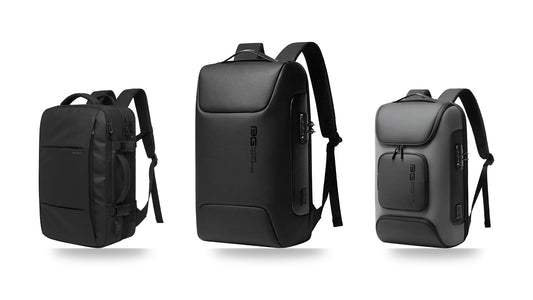
Want to see what quality-first, customization-ready backpacks look like before you brief a supplier? Check out our business backpacks collection, including the Bange Aerox 2517 Business Backpack and the Bange Nomado 6625 Leather Laptop Backpack as benchmarks for craftsmanship.